

Did the US Order Anthropic to Suspend Claude Fable 5 and Mythos 5 Worldwide
Regulating AI Logo
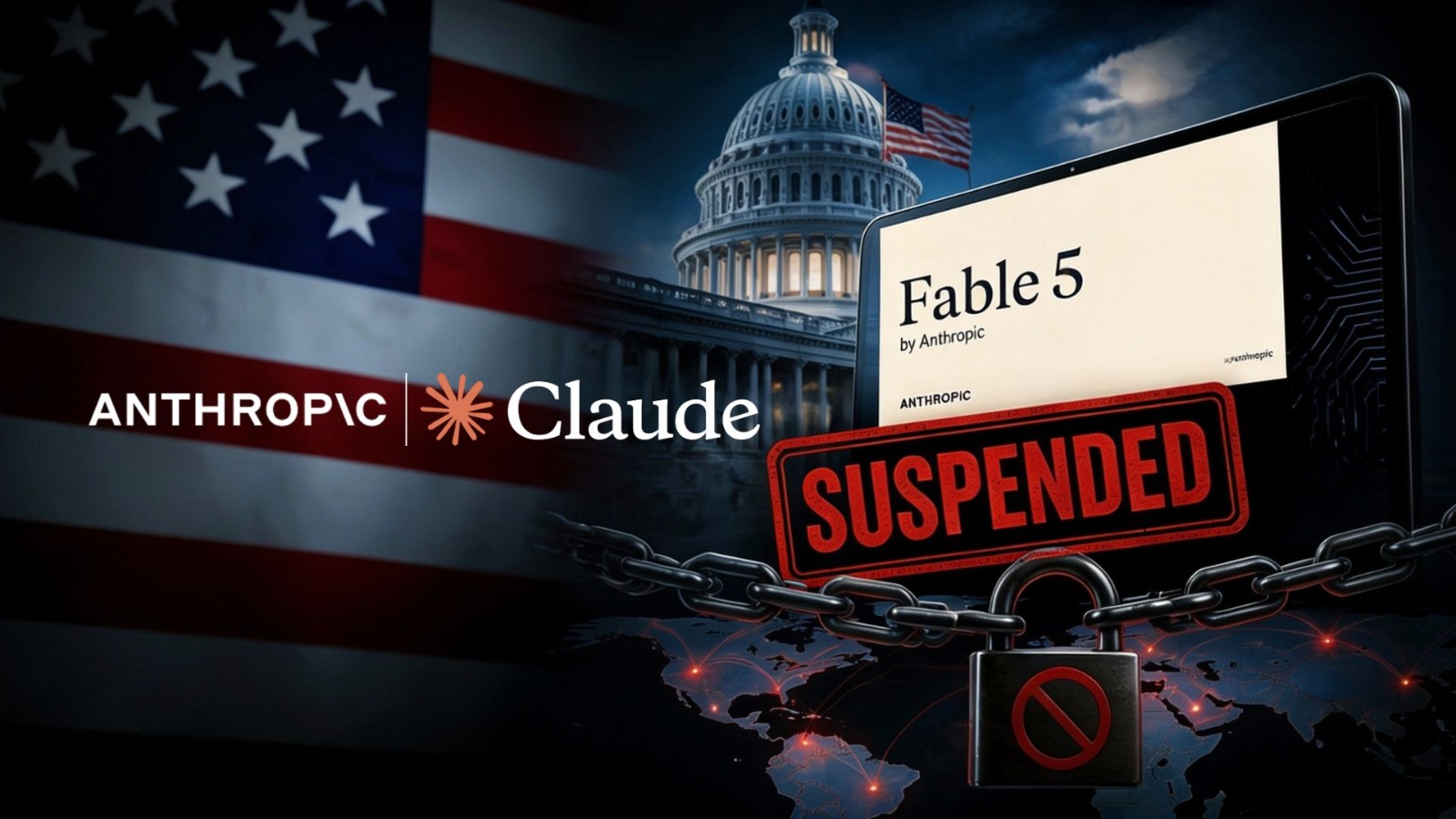
Why Did the U.S. Order Anthropic to Suspend Claude Fable 5 and Mythos 5 Worldwide?
US orders Anthropic to suspend Fable 5 and Mythos 5 worldwide, reigniting debate over AI export controls, transparency, and regulation.
We believe the government should have the ability to block unsafe deployments as part of a statutory process that is transparent, fair, clear, and grounded in technical facts.”
WASHINGTON, DC, UNITED STATES, June 16, 2026 /EINPresswire.com/ -- The U.S. Department of Commerce has issued an export control directive requiring AI company Anthropic to restrict access to its newest artificial intelligence models, Claude Fable 5 and Mythos 5, for foreign nationals. The directive, issued on June 12, follows concerns related to the security capabilities of the company's most advanced AI systems.— Anthropic
According to reports, Anthropic has suspended access to both models globally after determining it could not reliably verify users' nationalities in real time. Other Claude models remain available to users. A U.S. government official confirmed that the Commerce Department sent the directive to the company.
The action reportedly follows the identification of a technique that could allow users to bypass certain safeguards built into the models. Anthropic has stated that it disagrees with the characterization of the vulnerability as a significant threat, noting that similar issues could be identified using other publicly available AI systems.
Claude Fable 5 and Mythos 5 were introduced on June 9 as Anthropic's latest frontier AI models. Mythos 5 had previously been available only to a limited group of vetted organizations through the company's Project Glasswing initiative, while Fable 5 was designed to offer advanced capabilities with additional safety measures for broader deployment.
The directive comes amid ongoing discussions between Anthropic and federal authorities regarding the deployment and governance of advanced AI technologies. Industry observers note that the development highlights growing government attention to national security considerations related to frontier AI systems and the evolving debate around regulatory frameworks for advanced AI model access and deployment.
The situation has renewed calls from policymakers, researchers, and industry stakeholders for clearer standards governing AI safety testing, export controls, and the oversight of increasingly capable AI systems.
About RegulatingAI
RegulatingAI is a nonprofit platform focused on AI governance, policy, and regulation. It brings together policymakers, researchers, industry leaders, and AI experts to promote responsible AI development through education, advocacy, events, podcasts, and policy discussions. The organization aims to advance ethical, transparent, and globally coordinated AI regulation.
Upasana Das
Knowledge Networks
email us here
Legal Disclaimer:
EIN Presswire provides this news content "as is" without warranty of any kind. We do not accept any responsibility or liability for the accuracy, content, images, videos, licenses, completeness, legality, or reliability of the information contained in this article. If you have any complaints or copyright issues related to this article, kindly contact the author above.
