

BDSLCCI Framework 2026: Expanded Cybersecurity Tools and Guidelines for Small and Medium Businesses
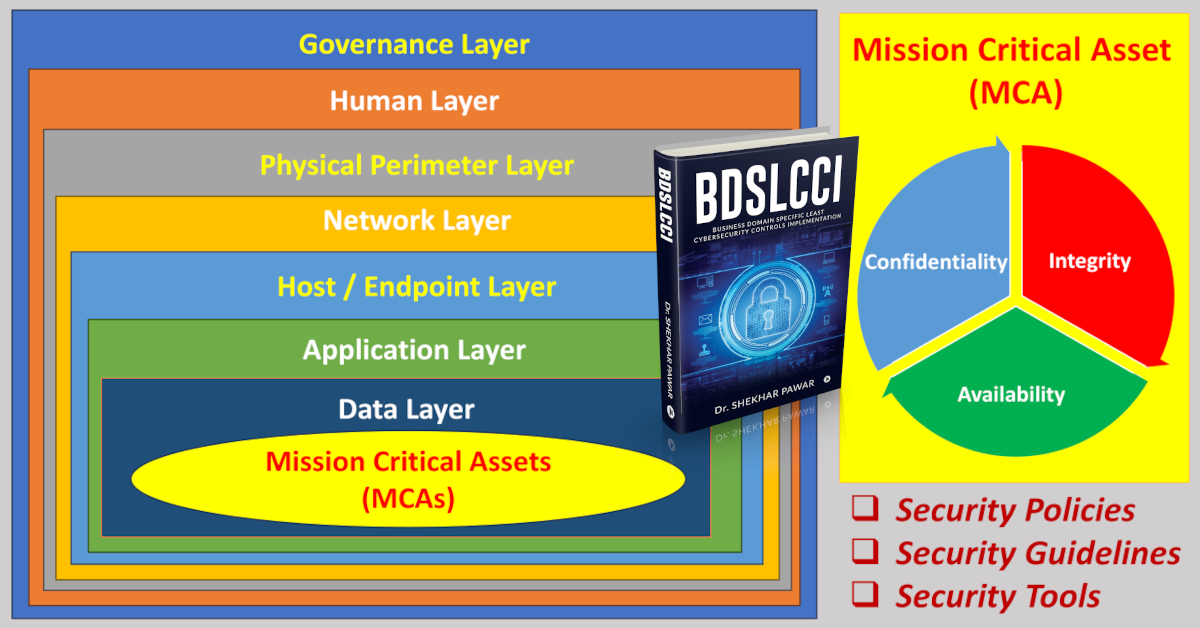
BDSLCCI Defense-in-Depth (DiD) and Mission Critical Asset (MCA) Framework
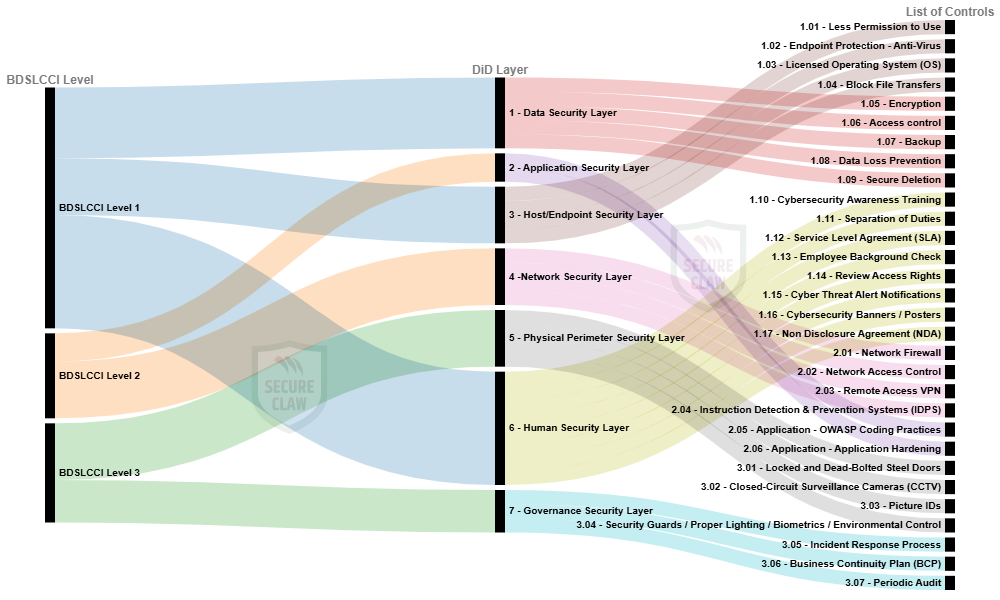
BDSLCCI Defense-in-Depth Mapping with Recommended Controls
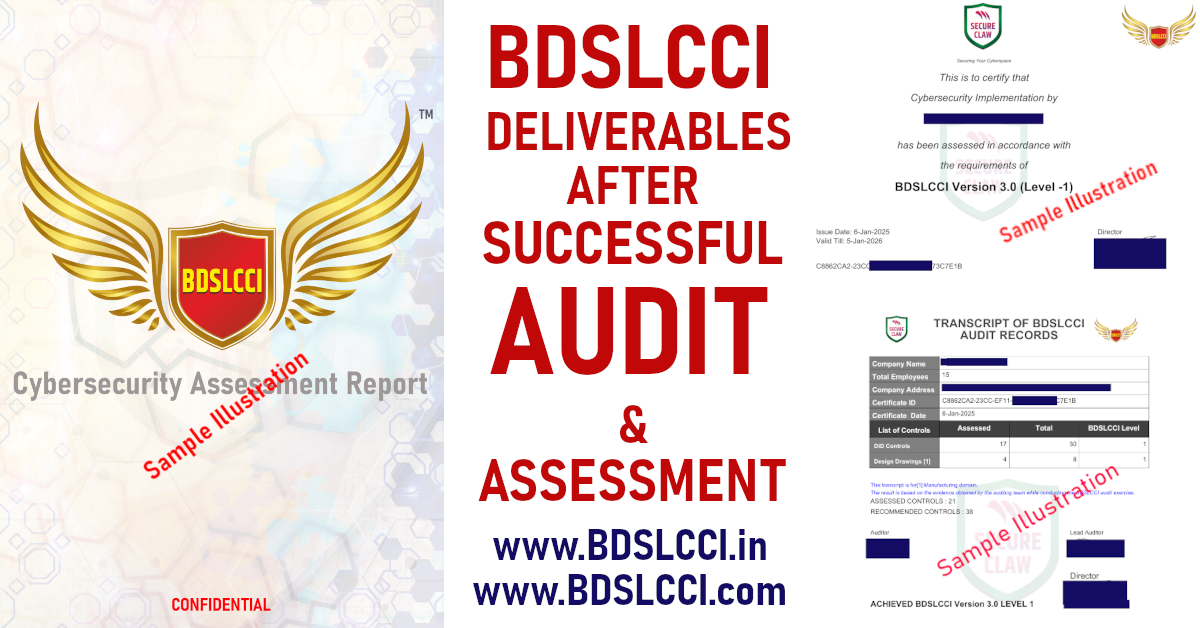
BDSLCCI Deliverables after Successful Audit and Assessment
Supporting SMEs in 2026, BDSLCCI introduces new cybersecurity features and governance guidelines for safer business operations.
In 2026, the BDSLCCI Framework will remain unchanged in its core structure, which is founded on the principles of Defense in Depth (DiD) and Mission Critical Assets (MCAs). However, several optional guidelines and features have been introduced on the web platform to support Micro, Small, and Medium Enterprises (MSMEs/SMBs/SMEs). By combining the principles of DiD with MCA protection, the BDSLCCI Framework offers a structured yet flexible approach to safeguarding digital operations. Traditionally, MSMEs have faced challenges such as limited financial resources, lack of expertise, and fragmented security practices. BDSLCCI addresses these issues by providing a tailored set of cybersecurity controls specific to the business domain of each organization, along with ready-to-use policies, practical guidelines, and compliance tools that simplify implementation without requiring advanced technical knowledge. Its web platform enables MSMEs to adopt essential controls - such as data protection, incident response, and secure configurations - in a cost-effective and scalable manner. This innovation not only mitigates cyber risks but also empowers MSMEs to meet regulatory requirements, strengthen customer trust, and operate with greater resilience in the digital economy.
In 2025, the BDSLCCI Framework gained significant international recognition through multiple research publications across leading journals. These studies emphasized the urgent need for a paradigm shift in cybersecurity implementation for SMEs, introduced business domain-specific controls tailored to MSMEs including micro-enterprises, and demonstrated how the framework can support compliance with global regulations such as the EU GDPR and India’s DPDP Act. Further, its application to healthcare SMEs highlighted a scalable approach to achieving HIPAA compliance and safeguarding sensitive health information. Collectively, these contributions underscore the versatility of the BDSLCCI Framework in addressing diverse cybersecurity challenges while enabling smaller organizations to strengthen resilience, meet regulatory requirements, and operate securely in the digital economy.
The BDSLCCI platform provides a wide range of downloadable policy documents, including the IT Usage and Cybersecurity Policy, ARCSIK (Accountable, Responsible, Consulted, Supportive, Informed, and Knowledgeable) Matrix, the Endpoint Security Policy, the Human Security Policy, the Employee Consent Form for Data Privacy, Sample NDA Clauses in Employee Offer Letters, the Network Security Policy, the Application Security Policy, the BDSLCCI Asset Tracker, the Data Access Control Policy, the Data Backup and Recovery Policy, the Data Encryption Policy, the Data Loss Prevention Policy, the Data Secure Deletion Policy, the Physical Perimeter Security Policy, the Incident Response and Recovery Process, the Business Continuity Plan (BCP), the Incident Response Policy, the Incident Response Form for MCAs, and the Incident Response Team MCAs.
In addition to these policies, the BDSLCCI web platform also offers a comprehensive collection of downloadable guideline documents. These include Human Safety and Privacy Guidelines, Wi-Fi Router Security Guidelines, Maker-Checker Security Guidelines, EU GDPR Policy Guidelines, OS Applications and Database Servers Guidelines, Database Security Guidelines, Email Security Guidelines, Deepfake Prevention Security Guidelines, Mobile Device Security Guidelines, Digital Rights Management (DRM) Guidelines, Incident Response Guidelines for Common Cyber-Attack Types, Digital Personal Data Protection (DPDP) India Guidelines, Network Segmentation and Segregation Guidelines, Patch Management Guidelines, Cloud Computing Security Guidelines, VOIP Security Guidelines, CCTV Security Guidelines, Security Guards Guidelines, Security Lighting Guidelines, Security Biometrics Guidelines, Security Environmental Control Guidelines, Application Regular Update Guidelines, Network Firewall Security Guidelines, Secure Coding Guidelines, Hospital Equipment Procurement Security Guidelines, General Equipment Procurement Security Guidelines, Data Centre Security Guidelines, Capacity Management Guidelines, and Password Management Guidelines.
In 2026, the BDSLCCI Framework for India’s MSMEs has been modified to incorporate the requirements of the 15 Elemental Cyber Defense Controls recommended by CERT-In. These controls include Effective Asset Management (EAM), Network and Email Security (NES), Endpoint and Mobile Security (EMS), Secure Configurations (SC), Patch Management (PM), Incident Management (IM), Logging and Monitoring (LM), Awareness and Training (AT), Third-Party Risk Management (TPRM), Data Protection, Backup and Recovery (DPBP), Governance and Compliance (GC), Robust Password Policy (RPP), Access Control and Identity Management (ACIM), Physical Security (PS), and Vulnerability Audits and Assessments (VAA). A new feature in the BDSLCCI India web platform enables MSMEs to select their preferred implementation path for these 15 Elemental Cyber Defense Controls.
The BDSLCCI Web Platform provides MSMEs with a comprehensive suite of cybersecurity services tailored to their business domains. After registration, organizations gain access to complimentary tools such as an online gap analysis, prioritized lists of recommended cybersecurity controls, teammate access, key policies, matrices, guidelines, and employee awareness resources including posters and banners. Daily cyber threat alert emails keep companies updated on emerging risks, while optional low-cost online training ensures employees are tested and prepared. For deeper assurance, BDSLCCI offers online or physical audits, which result in complimentary certificates, transcripts, and detailed web analytics reports demonstrating the effectiveness of implemented controls. Additional consulting and implementation support are available as optional services, making the platform a scalable and cost-effective solution for strengthening cybersecurity resilience in smaller enterprises.
Recently, SecureClaw published an article analyzing cyber threat data from 2025 to highlight recurring attack patterns across the full spectrum of organizations, from large enterprises to small and medium-sized businesses (SMBs). Insights from the latest cyberattacks have enabled BDSLCCI to introduce new features and control enhancements to better protect against evolving cyber threats.
Dr. Shekhar A Pawar
SecureClaw Inc.
+1 218-718-2121
email us here
Visit us on social media:
LinkedIn
Instagram
Facebook
YouTube
X
Other
BDSLCCI Cybersecurity Framework at the International Conference AIM-2024 held in San Francisco, USA
Legal Disclaimer:
EIN Presswire provides this news content "as is" without warranty of any kind. We do not accept any responsibility or liability for the accuracy, content, images, videos, licenses, completeness, legality, or reliability of the information contained in this article. If you have any complaints or copyright issues related to this article, kindly contact the author above.
